How AI Is Transforming Solar Sales Teams in Australia in 2026
AI for solar sales teams is reshaping how Australian installers qualify leads, book appointments, and close deals. Here's what every solar sales leader needs to know.
Solar Industry Specialist
15+ years Solar Installation | Lead Qualification | Business Growth
🇦🇺 Brisbane
How AI Is Transforming Solar Sales Teams in Australia in 2026
Australia's solar industry crossed a significant threshold in 2025: more than one in three homes now has a rooftop solar system, and the total installed rooftop capacity hit 26.8GW. For solar sales teams, that saturation brings a new set of challenges. The easy early-adopter sales are largely done. The customers left in the market are comparison-shopping harder, responding less reliably to cold outreach, and increasingly choosing whoever reaches them first with a credible, knowledgeable response.
AI for solar sales teams is the answer a growing number of Australian installers are finding to this challenge — not as a replacement for skilled salespeople, but as a force multiplier that handles the repetitive, time-sensitive work that was previously either done poorly or not at all.
The Problem AI Solves for Solar Sales Teams
To understand how AI is changing solar sales teams, you first need to understand what solar salespeople actually spend their time doing — and what portion of that time is genuinely high-value.
A typical solar sales consultant's week, before AI automation, looks something like this:
- 30–40% chasing new leads by phone and email (many of which are no-shows or already booked with competitors)
- 15–20% qualifying prospects who turn out to be renters, already-installed homeowners, or otherwise unsuitable
- 20–25% preparing quotes and proposals
- 15–20% attending appointments and closing deals
- 5–10% on admin, CRM updates, and reporting
Only the appointment and closing work is genuinely irreplaceable by automation — it requires relationship skills, technical knowledge, and situational judgement that AI cannot replicate. Yet most solar salespeople are spending less than a fifth of their time on it.
AI for solar sales teams changes this ratio dramatically by taking over the lead response, initial qualification, and appointment booking phases — leaving human consultants to do what they are actually good at and paid to do.
How AI Is Being Deployed Across Solar Sales Workflows
AI for Initial Lead Response
The most immediate application of AI in solar sales is initial lead response. When a homeowner submits an enquiry, an AI voice agent (like LeadTrackAI's JAMES) calls them back within seconds, introduces itself as calling from the solar company, and begins a structured qualification conversation.
This matters because the alternative — waiting for a human consultant to be available — introduces delays that are fatal to conversion. Research consistently shows that leads contacted within five minutes convert at five to ten times the rate of leads contacted after one hour — the core argument behind the 5-minute rule for solar leads. For solar installers buying leads at $70–$150 each, a human-dependent response system is inherently wasteful — see how AI solar lead response closes that gap.
The AI response does not try to sell anything. Its only goal is to qualify the lead (property address, electricity bill, ownership status, battery interest) and book an appointment for a human consultant. This is a division of labour that works precisely because it plays to what AI does well — speed, consistency, 24/7 availability — while preserving the human close.
AI for After-Hours and Weekend Coverage
Between 35% and 50% of solar enquiries in Australia are submitted outside business hours. Without AI, these enquiries sit unanswered until the next business morning — by which time competing installers who run automation have already called, qualified, and booked the appointment.
Solar sales teams using AI for after-hours coverage report that this single change has the largest immediate impact on their appointment volume. The AI system treats a 9pm Sunday enquiry exactly the same way it treats a 10am Tuesday enquiry — the homeowner hears from the company within seconds, feels that their enquiry was taken seriously, and is more likely to stay engaged. The full playbook to automate solar lead response walks through the after-hours setup step by step.
AI for Lead Nurturing and Follow-Up Sequences
Not every lead books an appointment on the first call. Research from various sales productivity studies shows that 80% of sales require five or more follow-up contacts, but the majority of salespeople give up after one or two attempts.
AI automates this follow-up sequence without demanding human time for each touch. After an initial call, automated SMS and email sequences can be triggered at pre-set intervals — reminding the lead of the rebate deadline, offering updated pricing, sharing case studies, or simply checking in. These sequences run in the background while the sales team focuses on active prospects.
For Australian solar businesses capitalising on the May 2026 federal battery rebate deadline, automated urgency sequences — timed around the rebate change — have been particularly effective at converting hesitant leads.
What AI Cannot Do in Solar Sales
It is worth being precise about the limits of AI in solar sales, because overpromising on AI capabilities leads to poor implementation decisions.
AI voice agents cannot:
- Navigate complex technical objections that require product knowledge and judgement
- Build genuine rapport with a homeowner who is resistant or sceptical of solar
- Read non-verbal cues or respond to emotional context in the way a skilled consultant can
- Close deals that involve significant financial commitment without human involvement
- Handle disputes, complaints, or post-installation support conversations appropriately
The most effective solar sales teams using AI do not try to automate the close. They automate everything before the close — response, qualification, nurture, appointment booking — and then deploy their best consultants on prospects who are already warmed, qualified, and expecting a call.
This model produces dramatically better outcomes than either pure automation (which loses deals that need human engagement) or pure human teams (which lose deals through slow response and inconsistent follow-up).
The Impact of AI on Solar Sales Team Productivity
| Metric | Without AI | With AI (LeadTrackAI) |
|---|---|---|
| Average lead response time | 45 min – 4 hours | Under 10 seconds |
| After-hours lead coverage | 0–20% | 100% |
| Lead qualification rate | 50–65% of leads attempted | 85–95% of leads attempted |
| Appointments per 100 leads | 10–18 | 25–35 |
| Sales consultant time on high-value activity | 15–20% | 55–70% |
| Cost per booked appointment | $350–$900 | $80–$180 |
Source: LeadTrackAI platform data; Demand Local 2025; DAS Technology analysis
The most striking number in this table is the shift in sales consultant time allocation. When AI handles lead response and qualification, the human sales team's time on high-value activity — appointments, proposals, closings — can triple. For a five-person solar sales team, that is the equivalent of gaining two or three additional productive headcount without any additional payroll cost.
Give Your Solar Sales Team an AI Partner That Works 24/7
LeadTrackAI's JAMES agent qualifies your leads, books appointments, and hands them to your team ready to close. Set up in 15 minutes. 30-day money-back guarantee. [Book your free demo → leadtrackai.io/demo]
How Australian Solar Companies Are Structuring AI-Augmented Sales Teams
The most effective implementation model we see across LeadTrackAI's Australian client base involves three distinct layers:
Layer 1: AI Response and Qualification (Automated)
All inbound leads flow through the AI response system regardless of channel or time of day. JAMES calls within 8.2 seconds, qualifies, and either books an appointment or triggers a nurture sequence. No human involvement required at this stage.
Layer 2: Human Consultation and Proposal (Skilled)
Booked appointments are handled by experienced solar consultants who arrive at each conversation with full qualification data from the AI call — property address, electricity bill, battery interest, any specific questions the homeowner raised. The consultant's role is to design the right system, present the proposal, handle technical questions, and close the deal.
Layer 3: AI Follow-Up and Retention (Automated)
Post-appointment, automated sequences follow up with leads that did not immediately commit — sharing testimonials, rebate reminders, and updated pricing. Post-installation, automated check-in sequences maintain relationship quality and identify referral and upsell opportunities (particularly relevant for battery storage upsell on existing solar customers).
AI and Solar Sales Team Culture: Addressing the Fear Factor
A common concern among solar sales managers introducing AI is team resistance. Salespeople, understandably, worry about whether AI is a precursor to reducing headcount. The reality — and the data from AI-augmented teams — tells a different story.
When AI handles the repetitive, low-conversion lead chase work, the human salespeople who remain are working on better prospects, closing at higher rates, and earning more commission. Their job satisfaction typically improves because they are doing the work that attracted them to sales in the first place — building relationships and closing deals — rather than spending their days chasing unresponsive contacts.
solar installers who have implemented LeadTrackAI consistently report that their sales teams adapted quickly once they experienced the quality of pre-qualified, AI-booked appointments compared to self-generated lead follow-up. An appointment where the prospect already knows what the call is about, has confirmed their electricity bill and ownership status, and has voluntarily booked a time to speak is fundamentally different from a cold follow-up call on a shared lead.
Emerging AI Applications in Solar Sales: What Comes Next
The current generation of AI for solar sales teams focuses primarily on response speed and qualification. But the technology is evolving rapidly, and forward-looking solar businesses are already experimenting with:
AI-assisted proposal generation: Using qualification data and energy consumption information to generate first-draft solar proposals automatically, which consultants then review and personalise.
Predictive lead scoring: AI systems that analyse lead source, qualification data, and historical conversion patterns to rank leads by likelihood of closing — allowing sales teams to prioritise their time on the highest-probability prospects.
AI-driven upsell identification: Automated analysis of existing customer electricity usage data to identify the optimal timing for battery storage upsell conversations — particularly valuable given the May 2026 rebate deadline.
Sentiment analysis on call recordings: AI review of sales call recordings to identify patterns in successful versus unsuccessful conversations, providing coaching insights for sales managers.
Frequently Asked Questions About AI for Solar Sales Teams
Will AI replace solar sales consultants?
No. The highest-value parts of solar sales — technical advice, proposal design, relationship building, and closing — require human skill and judgement. AI handles the volume work (initial response, qualification, nurture) so consultants can focus on what they do best. In practice, AI adoption tends to increase the productivity and earnings of solar sales teams rather than reduce their size.
How do customers respond to AI-qualified appointments?
Most homeowners who have been qualified by an AI voice agent and have booked an appointment are unaware that the initial call was AI-handled. The key is that the AI call is fast, professional, and relevant — it asks the right questions, confirms the appointment, and sends a follow-up SMS with the details. By the time the human consultant calls, the homeowner feels the company is responsive and organised.
Does AI work for commercial solar sales as well as residential?
Yes, though the qualification workflow differs. Commercial solar leads typically require different questions — facility type, operating hours, energy consumption data, decision-maker authority — and the sales cycle is longer. LeadTrackAI supports separate qualification scripts for residential and commercial contexts, and commercial leads can be routed to dedicated sequences with appropriate follow-up cadence.
How do I measure whether AI is improving my solar sales team's performance?
Key metrics to track before and after implementation: average lead response time, lead-to-appointment conversion rate, appointments per lead source, and revenue per lead. Most installers see measurable improvement in appointments per lead within the first two weeks of AI deployment.
Can AI handle the qualification for battery storage specifically?
Yes. LeadTrackAI's solar qualification scripts include battery storage interest and can be configured to explain the current federal rebate at a high level, confirm eligibility criteria, and flag high-interest battery leads for priority follow-up. Given the upcoming May 2026 rebate changes, this qualification step is particularly commercially valuable.
What training does my sales team need when we implement AI?
The primary training requirement is for sales consultants to understand how AI-qualified appointments differ from cold leads — specifically, what data has already been collected and what was discussed in the AI call. LeadTrackAI provides call transcripts and qualification summaries for every booked appointment, so the preparation required is minimal. Most teams are fully adapted within one to two weeks.
Is there a risk that AI makes our company seem impersonal?
This risk exists if AI is used badly — for example, if an AI system tries to do too much and replaces human interaction at stages where it adds value. The best implementation is one where AI handles speed-critical, repetitive early-stage work and humans handle the high-value conversation stages. When done correctly, customers typically experience the combination as a company that responds instantly AND has knowledgeable consultants — better than most manual teams manage.
Conclusion
AI for solar sales teams in Australia is not a future technology being discussed in industry conferences — it is a present-day competitive reality reshaping conversion rates across the market right now. The installers implementing AI-powered lead response and qualification are booking more appointments from the same lead spend, freeing their consultants to close at higher rates, and capturing after-hours opportunities that their competitors are still missing.
The solar market in 2026 rewards speed, consistency, and scale — precisely the characteristics that AI adds to a human sales team. The businesses that view AI as a threat to their salespeople are misreading what the technology actually does. Those that view it as the engine that makes their salespeople more productive are seeing it in their appointment volumes, their conversion rates, and their revenue.
About the Author
Robert SullivanSolar Industry Specialist
15+ years Solar Installation | Lead Qualification | Business Growth
Robert brings 15 years of solar installation experience combined with lead automation expertise. He focuses on systems that improve installer profitability.
Apply for Q1 2026 Pilot Program
Fill out the form below and we'll be in touch within 24 hours.
Apply NowKeep Reading
Explore related articles to deepen your understanding of lead automation and sales optimization.

How to Automate Solar Lead Response and Book More Appointments in 2026
Solar lead response automation can 3x your appointment bookings. Learn how Australian installers are using AI to respond to every enquiry in under 10 seconds.

Best Solar Lead Management Software for Australian Installers in 2026
Comparing the best solar lead management software available to Australian installers in 2026. From CRM integrations to AI follow-up, here's what actually moves the needle on conversion.

Lead Response Time Benchmarks: What Top Solar Companies Do Differently in 2026
What are the lead response time benchmarks for Australian solar companies in 2026 — and where does your business stand? Real data from 50,000+ leads.
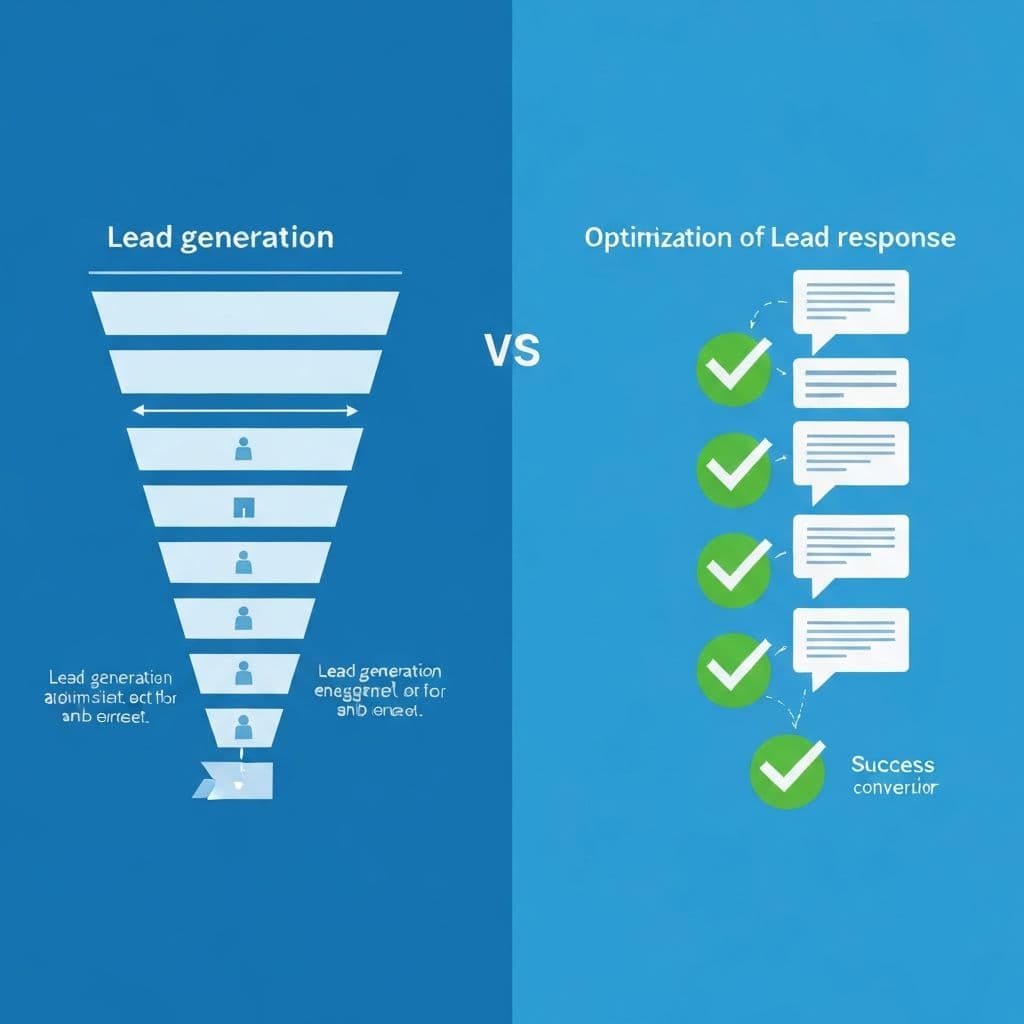
Solar Lead Generation vs Lead Response: Where Are You Actually Losing Revenue?
Most solar installers focus on lead generation but the real revenue leak is in lead response. This guide shows you where the money is going — and how to stop losing it.
Revenue Recovery Calculator
Monthly Revenue Recovery
$0
Based on 600 leads × 15% lift × $3,500 job value