The Hidden Hole in Your Sales Bucket: How to Calculate (and Fix) Your Lead Qualification ROI
Every sales organization loses revenue in their qualification process. Discover the hidden cost of poor qualification and how AI fixes it.
Lead System Architect
20+ years IBM, Salesforce | Enterprise Sales Architecture | AI Deployment
🇦🇺 Melbourne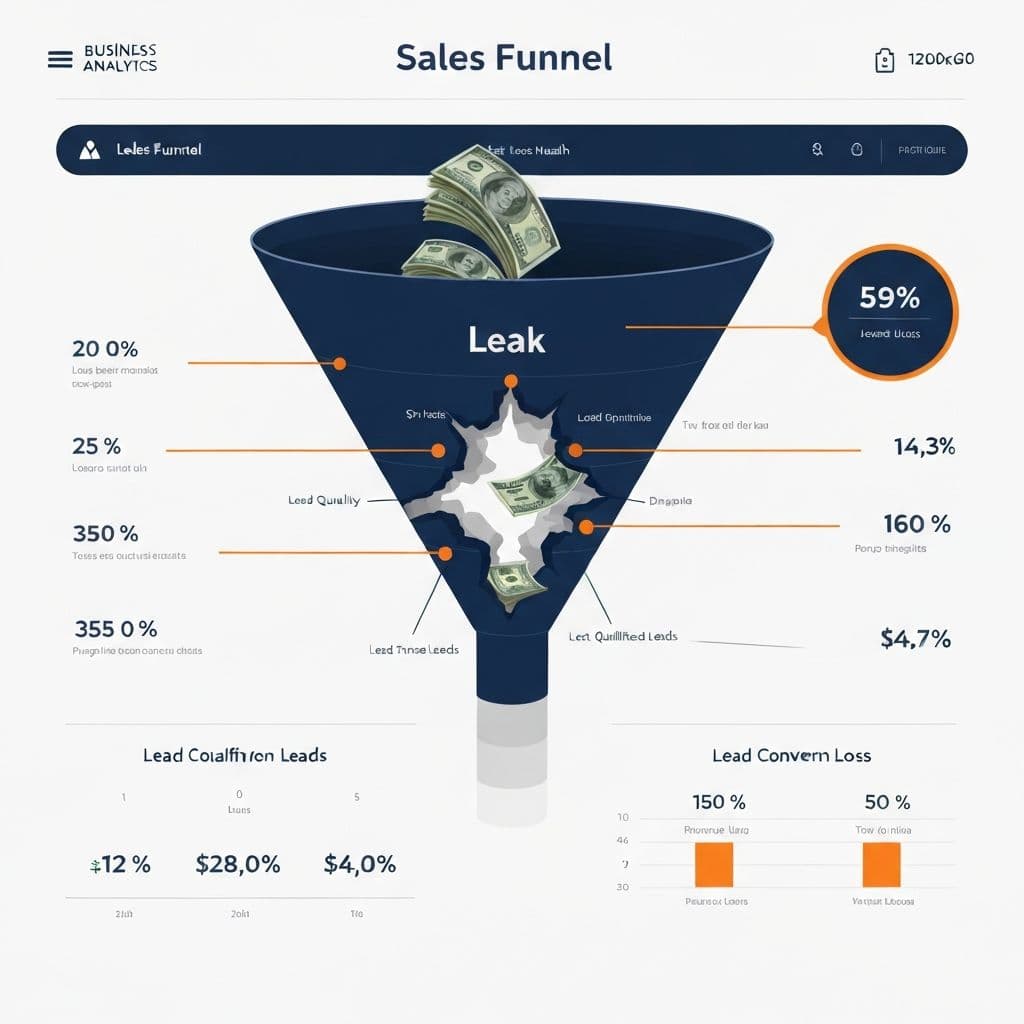
How to Automate Solar Lead Response and Book More Appointments in 2026
Every Friday afternoon, thousands of Australian homeowners fill out solar enquiry forms. By Monday morning, more than a third of them have already signed with a competitor. Not because that competitor had better panels, lower prices, or stronger warranties — but because they called back first.
Solar lead response automation is no longer a nice-to-have for Australian installers. With 78% of solar shoppers choosing the first company that responds, the speed at which your business follows up a new enquiry is now one of the most powerful conversion levers you have. This guide explains how the automation works, what the data says, and how to implement it in your business.
Why Solar Lead Response Speed Determines Your Revenue
The solar market in Australia is intensely competitive. As of 2025, there are more than 5,000 registered solar installers competing for leads — many of them buying from the same shared pools on platforms like SolarQuotes and Solar Choice, where a single homeowner enquiry can be sold to three, four, or five companies simultaneously.
In that environment, whoever calls first wins. The research backs this up decisively.
A study published by Demand Local found that responding to a lead within five minutes makes you 21 times more likely to convert it compared to responding after 30 minutes. A separate analysis from the Harvard Business Review showed that leads contacted within an hour were seven times more likely to have a meaningful conversation with a decision maker than leads contacted after that window.
For Australian solar installers, the stakes are even higher. The average solar job is worth $7,000 to $15,000 in revenue. At a typical conversion rate of 15%, every 100 leads should produce 15 sales. But if your response time is sitting at two or three hours — which is common across the industry — you are almost certainly converting closer to 8–10%. That gap, multiplied across a year, is the difference between a business that grows and one that stagnates.
The After-Hours Problem Is the Biggest Untapped Opportunity
Research consistently shows that 35–50% of solar enquiries are submitted outside standard business hours — after 5pm, on weekends, and on public holidays. These are the exact moments when intent is high (the homeowner just received a power bill, or just saw a neighbour's new install), but follow-up is lowest.
Without solar lead response automation, those enquiries sit in an inbox or CRM until Tuesday morning. By then, two or three competitors with faster systems have already had conversations, run quotes, and potentially booked the job.
What Solar Lead Response Automation Actually Does
Solar lead response automation uses AI-powered voice agents, SMS, and email to contact a new lead within seconds of them submitting an enquiry — automatically, without any human intervention.
The best systems, like LeadTrackAI's JAMES agent, work across three channels simultaneously:
- Voice: An AI agent calls the lead within 8.2 seconds of the form submission. It introduces itself, asks two or three qualification questions, and books an appointment directly into the sales team's calendar.
- SMS: A personalised text message is sent at the same time, providing a human-readable follow-up that arrives even if the call goes unanswered.
- Email: A structured follow-up email is sent within the same minute, confirming the enquiry and providing next steps.
This multi-channel approach is important because it covers every way a lead might prefer to be contacted. Some people won't answer an unknown number but will respond to an SMS. Others check email first. The goal is to be present in every channel simultaneously — something no human team can do at scale.
What Happens During the AI Voice Call
The AI voice agent used in solar lead automation is not a generic chatbot. The most effective systems are trained on solar-specific terminology, Australian rebate structures, and common homeowner objections.
A typical call using JAMES sounds like this:
The agent introduces itself as calling from the solar company in response to the recent enquiry. It asks for the property address, confirms the approximate quarterly electricity bill, and checks whether the caller owns the property. Within 60–90 seconds, it has qualified the lead and, in most cases, offered two available appointment times for a consultant to follow up.
The lead is then logged in the CRM with call notes, qualification data, and a booking confirmation — all without a single human touch until the scheduled appointment.
Solar Lead Response Automation: The Numbers
| Response Time | Lead-to-Appointment Conversion Rate |
|---|---|
| Under 1 minute | 28–35% |
| 1–5 minutes | 20–28% |
| 5–30 minutes | 12–20% |
| 30 minutes – 2 hours | 8–12% |
| 2–24 hours | 4–8% |
| Over 24 hours | 1–4% |
Source: Demand Local 2025, DAS Technology analysis, LeadTrackAI platform data (150+ Australian businesses)
The table above illustrates why automation that operates in seconds rather than minutes produces dramatically different outcomes. A conversion rate of 30% versus 8% on the same 600 monthly leads represents an additional 132 appointments per month. At an average job value of $10,000 with a 70% close rate from appointment, that is over $900,000 in additional revenue annually — from the same marketing spend.
Setting Up Solar Lead Response Automation: A Practical Guide
Step 1: Audit Your Current Response Time
Before implementing automation, establish your baseline. Most installers are surprised — and not pleasantly — when they measure this honestly. Pull your CRM data for the last 90 days and calculate:
- The average time between lead submission and first contact attempt
- The percentage of leads contacted within 5 minutes
- The percentage of leads never contacted at all
For most small-to-medium installers, the average response time sits between 45 minutes and four hours. After-hours leads are often not contacted until the next business morning.
Step 2: Integrate Your Lead Sources
Effective solar lead response automation requires that your lead sources — SolarQuotes, Solar Choice, your website contact form, Facebook Lead Ads, Google Ads leads — all feed into a single automation hub in real time.
This is typically achieved through direct CRM integration or webhook connections. LeadTrackAI, for example, integrates with most major CRMs and lead capture platforms in under 15 minutes, triggering the AI response sequence the moment a new record appears.
Step 3: Configure Qualification Scripts for Solar
Generic qualification scripts produce generic results. Solar-specific automation should be trained to ask:
- The property address (for solar viability and state-based rebate eligibility)
- The approximate quarterly electricity bill (to size the system)
- Property ownership status (renters cannot authorise solar installs in most cases)
- Whether they are interested in battery storage (key for current rebate opportunities)
These four questions, handled in 90 seconds by an AI voice agent, give your sales team everything they need to prepare a tailored quote before the appointment.
Step 4: Set Up CRM Logging and Calendar Booking
Every interaction from the automated response sequence should be logged automatically in your CRM. This includes:
- Call recordings or transcripts
- Qualification answers
- Appointment bookings and calendar invites
- SMS and email send timestamps
This creates a complete lead history that your sales team can review before each appointment, allowing for personalised, prepared conversations rather than cold calls.
Comparing Automation Options for solar installers
| Feature | Manual Follow-Up | Basic Auto-Responder | AI Voice + SMS + Email |
|---|---|---|---|
| Response Time | 45 min–4 hours | Instant (email only) | Under 10 seconds |
| After-Hours Coverage | None | Email only | Full 24/7 |
| Lead Qualification | Human caller | None | AI-driven |
| Appointment Booking | Manual | None | Automatic |
| CRM Logging | Manual | Partial | Automatic |
| Monthly Cost | $4,000–$8,000 | $50–$200 | $997–$1,997 |
| Conversion Uplift | Baseline | Minimal | 2–3.4x |
The economics are compelling. A single Business Development Centre (BDC) staff member capable of managing after-hours lead follow-up costs between $50,000 and $80,000 per year in salary alone. AI-powered solar lead response automation at the $997/month tier ($11,964/year) delivers faster response times, 24/7 coverage, and consistent qualification quality at roughly 15–20% of that cost.
Ready to Automate Your Solar Lead Response?
LeadTrackAI responds to every solar enquiry in under 10 seconds — Voice, SMS, and Email — 24/7. Set up in 15 minutes, 30-day money-back guarantee, no credit card required. [Book your free demo → leadtrackai.io/demo]
Real-World Results: What Australian solar installers Are Seeing
The data from LeadTrackAI's client base across 150+ Australian businesses tells a consistent story. solar installers who implement AI-powered lead response automation typically see:
- Response time drop from an average of 45 minutes to under 10 seconds
- Conversion rate increase from 14–18% to 28–36% on the same lead volume
- After-hours lead capture improve from near zero to full coverage
- Sales team time freed from inbound qualification to focus on booked appointments
One client case — a Melbourne-based residential solar installer — saw 23 additional booked appointments in the first fortnight after implementation, without increasing their marketing spend by a single dollar. Their response time dropped from 45 minutes to 8 seconds.
Energy Queensland and Energy Locals are among the more prominent Australian energy organisations that have implemented LeadTrackAI's platform, indicating that the solution scales from small independents to large-volume energy retailers.
Common Questions About Solar Lead Response Automation
Does AI sound robotic on a phone call?
Modern AI voice agents have improved significantly. JAMES, LeadTrackAI's voice agent, uses natural speech patterns, contractions, and appropriate pauses to sound conversational rather than synthetic. Most homeowners do not identify the caller as AI during a standard qualification call. The system is designed to qualify and hand off to a human — not to replace the entire sales conversation.
Will automation work with my existing CRM?
LeadTrackAI integrates with most major CRMs including HubSpot, Salesforce, Zoho, and solar-specific platforms. The setup process typically takes 15 minutes and does not require developer involvement.
What happens if a lead calls back or asks to speak to a human?
The automation system is designed to flag these cases and route them immediately to the sales team. Any lead that requests human contact is escalated in real time, ensuring the experience remains appropriate and responsive.
Is automated calling legal in Australia?
Yes, when configured correctly. Australian regulations under the Spam Act 2003 and the Do Not Call Register Act 2006 apply to certain types of automated communications. LeadTrackAI is ACMA-compliant and automatically cross-checks numbers against the Do Not Call Register before initiating outbound calls. All automated emails include compliant unsubscribe mechanisms.
How quickly can I get set up?
LeadTrackAI's onboarding process is designed for a 15-minute setup. The integration with your lead sources and CRM is handled by the platform's team as part of the onboarding, and the AI scripts are pre-trained on solar-specific terminology before your first lead comes in.
What if leads come in at 2am?
The automation runs 24/7. A lead submitted at 2am on a Sunday receives the same 8.2-second response as a lead submitted at 10am on a Tuesday. The AI voice agent is configured to use appropriate greeting scripts for time of day, and leads can opt to receive a call-back at a preferred time if they do not want to be contacted immediately.
What is the ROI on solar lead response automation?
This depends on your current volume and conversion rate. For a typical installer receiving 300 leads per month with a 14% conversion rate, improving to 28% conversion on the same lead volume generates 42 additional appointments monthly. At a 70% close rate and $10,000 average job value, that is $294,000 in additional monthly revenue — against a $997 monthly platform cost.
Can the system handle battery storage enquiries specifically?
Yes. LeadTrackAI's solar-specific scripts can be configured to qualify battery storage interest, confirm eligibility for current federal rebates, and flag high-value prospects for priority follow-up. Given the May 2026 rebate deadline for batteries over 14kWh, this qualification step is particularly valuable for maximising current sales cycles.
Conclusion
Solar lead response automation is the single highest-ROI improvement most Australian solar installers can make to their sales process in 2026. The competitive dynamics of the market — thousands of installers competing for the same shared leads, 35–50% of enquiries arriving outside business hours, and buyers choosing whoever responds first — mean that speed of response is now a primary competitive advantage.
The technology to automate this response across voice, SMS, and email exists today, costs a fraction of manual staffing, and can be operational within 15 minutes. For solar installers spending $70–$150 per lead who are not converting at their potential, solar lead response automation is not a technology investment — it is a revenue recovery investment.
The installers implementing this now are not waiting to see if it works. They are booking the appointments their competitors are missing.
About the Author
Neel BhattacharyaLead System Architect
20+ years IBM, Salesforce | Enterprise Sales Architecture | AI Deployment
Neel builds lead qualification systems that capture revenue currently lost in manual qualification processes. His work focuses on quantifying the financial impact of qualification automation.
Apply for Q1 2026 Pilot Program
Fill out the form below and we'll be in touch within 24 hours.
Apply NowKeep Reading
Explore related articles to deepen your understanding of lead automation and sales optimization.
Solar Sales Dilemma: Why 90% of Your Leads Go to Competitors
Australian solar installers face intense lead competition. Fast response wins deals. Slow response loses them. Here is why.
The 5-Minute Rule: Why Your Sales Team Is Losing to Faster Competitors
The dealership or contractor who responds first wins. Data shows response time is the #1 factor in lead conversion. Here is why the 5-minute rule matters.
Revenue Recovery Calculator
Monthly Revenue Recovery
$0
Based on 600 leads × 15% lift × $3,500 job value